
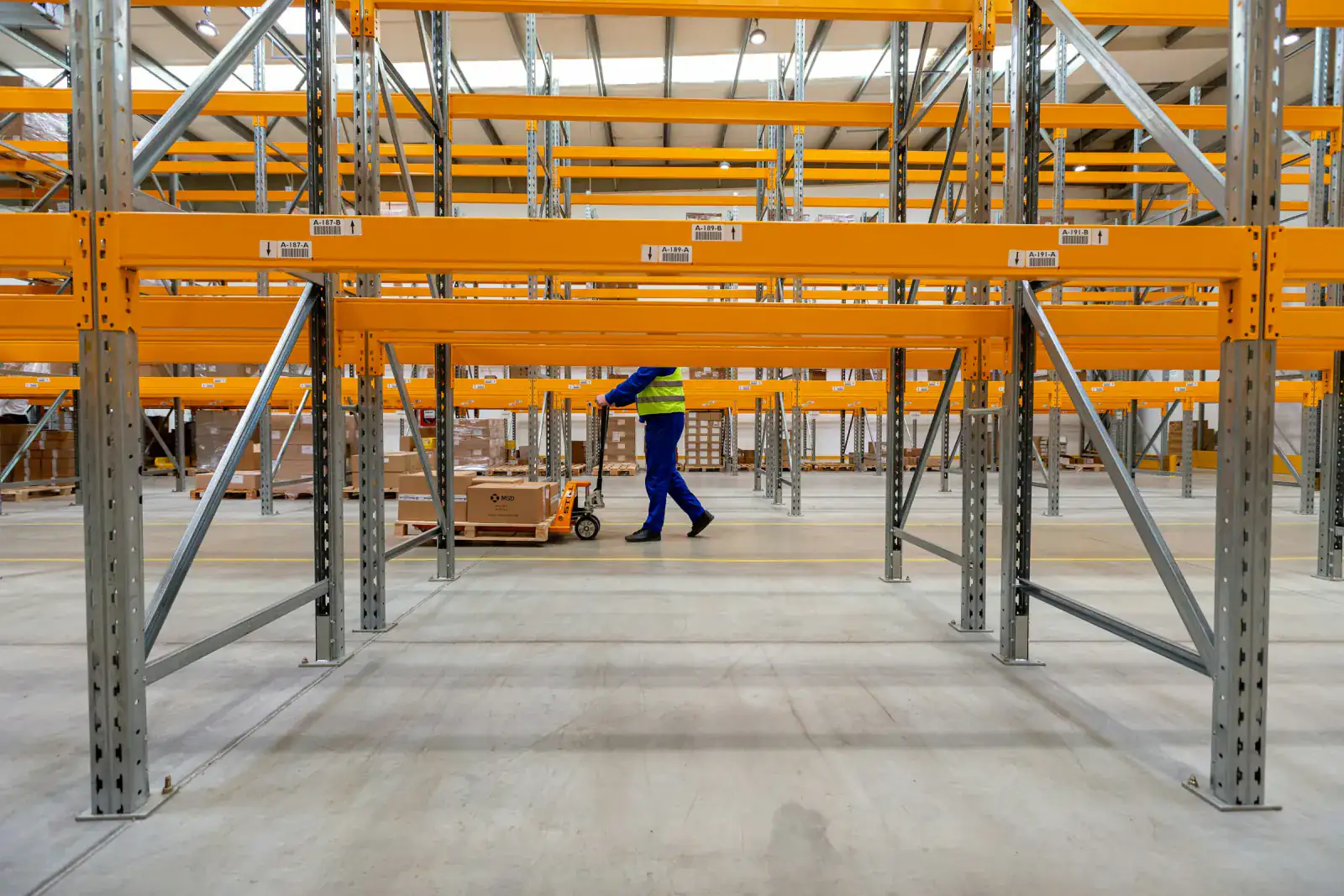
What kind of 3PL is being valued?
3PLs look alike from the street and earn very differently inside. The first step is to identify the model, because each raises a different first question.
| Model | How it earns | First valuation question |
|---|---|---|
| Dedicated site for one client | An open-book fee or a rate card | Does the contract cover the lease, fit-out and equipment for their full term? |
| Shared-user warehouse | Storage, handling and pick rates across many clients | How diverse and how sticky is the client book? |
| Ecommerce fulfilment | Per-order pick, pack and dispatch, plus storage and returns | How much of this year's revenue will still be here next year? |
| Temperature-controlled | Storage and handling with higher energy and plant costs | Who owns the refrigeration plant, and do energy costs pass through? |
| Managed logistics (4PL) | Fees for running or coordinating other providers | Is the value in contracts and systems, or in a few people? |
This page is about the contract book and the operation. The building (lease terms, make good, AASB 16 and site licences) is covered on our warehouse business valuation page, and fleet questions are on our transport and logistics page.
How do contract types change what a 3PL is worth?
Two 3PLs with the same profit can be worth different amounts because of what their clients have signed. We read every agreement and sort revenue by the commitment behind it.
| Contract type | What it commits | How a buyer reads it |
|---|---|---|
| Fixed term | A set term, with rates and service levels in schedules | Secure for the term remaining. A year to run, with no renewal under way, weakens it. |
| Evergreen | Rolls over until either side gives notice | Contracted only for the notice period. Years of rollovers show loyalty, not commitment. |
| Month to month | A rate card and standard terms | Valued on retention history and switching costs. |
| Open book (cost-plus) | Actual costs plus a management fee, sometimes with gain-share | Lower margin, lower risk. Check which costs are recoverable. |
| Closed book (rate card) | Prices per pallet, movement, order or line | Wider margin, cost risk on the 3PL. Indexation matters most. |
| Minimum volume | A revenue floor whatever the volumes | Moves volume risk to the client, if the client can pay. |
Three clauses change the reading of any contract. Termination for convenience on short notice means a long term protects less than it appears to. A change of control clause decides whether the contract survives a share sale. And on open book, a management fee set as a percentage of cost rewards cost growth, while a fixed fee with gain-share rewards efficiency.
Open-book revenue includes costs passed through at cost, so revenue growth can overstate earnings growth; we read those earnings at the fee line. Standard terms offered to small clients need a lawyer's eye too. Since 9 November 2023, a business can be penalised for proposing, using or relying on an unfair term in a standard form contract with a small business, which includes one with fewer than 100 employees or turnover under $10 million.
Prefer to talk? 0433 475 518
How do we measure the contract book?
We build one schedule of every client: revenue and contribution after direct labour for three years, contract type, term remaining, notice period, renewal history and site. From it we see how much of the earnings is contracted for the next one, two and three years, and the weighted remaining term measured by contribution, not revenue.
Churn is measured the same way: contribution lost each year against contribution won. A 3PL that loses a tenth of its book every year and refills it differs from one that has not lost a major client in a decade, even if both earn the same today. When a large client leaves, the rent and overheads stay, so the earnings at risk exceed its revenue share. See how customer concentration affects business value.
Then we match contracts to what they depend on. A dedicated site works when the client underwrites the lease and fit-out: a matching term, recovery of unamortised fit-out and make good on early exit, or a right to take over the lease. A shared-user site spreads the rent so no single exit strands it.
Labour: award coverage, labour hire and the peak
Labour is usually the largest cost in a 3PL. Warehouse employees are generally covered by the Storage Services and Wholesale Award or, where the employer is in the road transport and distribution industry and the site is a distribution facility, the Road Transport and Distribution Award, unless an enterprise agreement applies. The storage award does not cover employees to the extent the employer is covered by the road transport award, so which applies is a question of fact and law. An error is a back-pay liability a buyer will look for.
Peaks are usually staffed with casuals and labour hire. South Australia, Victoria, Queensland and the ACT require labour hire providers to be licensed and penalise businesses that use an unlicensed one. From 1 November 2024, the Fair Work Commission's regulated labour hire arrangement orders can add a further test: where an order applies, labour hire employees working for a host must be paid no less than the host's enterprise agreement would pay. No order can be made where the host is a small business employer (fewer than 15 employees) or a service rather than just labour is supplied, and the protected rate generally does not apply to engagements of 3 months or less.
Forklift operators need a high risk work licence (class LF, or LO for order-picking forklifts), held personally. The question for value is whether client rates move with each wage increase. Indexed rate cards and open book pass most of it through; fixed rates do not.
Do the systems protect the revenue or leak it?
A buyer looks at the warehouse management system in two ways. First as a switching cost: every client integration for orders, stock, dispatch and invoices is something a competitor must rebuild. Second as a billing engine. In a closed-book 3PL, revenue depends on capturing every chargeable event: receipts, pallet days, picks, labels, returns and projects. Work done but not billed comes straight off earnings, and due diligence will test invoices against activity data.
We also check whether the licence survives a change of control, who owns the client data and custom code, and what upgrades are due. Code only one contractor understands is a cost a buyer will deduct.
Racking, forklifts and automation: owned, financed or rented?
Most 3PLs hold racking, forklifts and reach trucks, and increasingly conveyors, sortation or robot systems. How each is funded changes both the earnings and the debt.
- Owned: no rental in earnings, but a replacement allowance is needed because forklifts and batteries wear out.
- Financed by chattel mortgage, hire purchase or finance lease: the balance owing is deducted like other debt.
- Rented with maintenance: the cost is already in earnings, provided the rentals are at market and transfer to a buyer.
- Client-funded: the equipment may leave with the client, and so may the earnings it supports.
Racking has little resale value out of a building and costs money to remove under make good. AS 4084.2:2023 covers the safe operation, inspection and maintenance of steel storage racking, and a buyer will ask for recent inspection reports. Automation bought for one client should be recovered within that client's contract; any shortfall is a risk to value. See how plant and equipment affects business value.
Value-added services, ecommerce and cold chain
Pick and pack, kitting, co-packing, labelling and returns usually earn more per labour hour than storage and tie clients closer, but carry more labour risk and swing with volumes. We analyse storage, handling, value-added work and ecommerce fulfilment as separate streams.
Ecommerce fulfilment has its own profile. Clients are numerous and small, volumes jump around promotions and Christmas, and some brands fail or move every year. Churn is part of the model, so we look at cohorts: how much of each year's revenue came from brands still active a year later, and what replacing the rest cost. Storage fees on slow stock are easy to invoice and harder to collect.
Cold chain adds energy, refrigeration plant and product risk: who owns and maintains the plant, whether energy costs pass through, backup power and the claims history for temperature losses. Customs warehouse licences and biosecurity approved arrangements attach to the site and the people in control; our warehouse valuation page explains how we treat them.
How are a 3PL's earnings normalised?
These adjustments come up most often, each made only where the evidence supports it.
| Adjustment | Why it is made |
|---|---|
| Rent on a consistent basis | AASB 16 moves lease costs below EBITDA. We deduct rent payable, at market where the landlord is related. |
| Implementation costs | Only the cost above a normal year's onboarding is added back. |
| Clients that have left or given notice | Their contribution is removed unless the space and labour already earn elsewhere. |
| One-off projects | A product recall or emergency storage for a competitor's client is removed or averaged. |
| Back-billing and credits | Moved to the periods they relate to. |
| Owner and family pay | Set at the cost of employing people to do the work. |
| Equipment funding | Rentals, finance and ownership put on one footing. |
Owner dependency is a separate test. In many 3PLs the founder designs the solutions, prices every tender, holds the senior relationships and knows how the system is configured. If managers already do that work, the business can pass to a buyer. If not, expect a lower price or a transition period and earn-out. See EBITDA vs EBIT in industrial valuations for which earnings line to use.
Which valuation methods fit a 3PL?
Most multi-client 3PLs are valued by capitalising maintainable earnings after rent and the cost of keeping equipment in service. The capitalisation rate reflects contracted term, client diversity and churn, cost pass-through, systems, management depth and growth. Rather than quote a rule-of-thumb multiple, we show which of those factors strengthen or weigh on the value.
Where one or two contracts dominate, or a new site is ramping up, a discounted cash flow following each contract's term, renewal prospects and the lease is usually the better primary method. See how we value industrial businesses and the guide to valuing a logistics business.
What does a buyer of a 3PL look at?
Buyers are usually larger logistics groups adding capacity or a sector, transport operators adding warehousing, freight forwarders and investors building a platform. Each tests the same things.
- Change of control and assignment clauses, and which clients must consent
- Whether the main clients will stay
- Invoices against system activity data
- Award, enterprise agreement and labour hire compliance
- Racking inspections, make good estimates and equipment payouts
- Stock accuracy, loss claims and insurance over client goods
When retention is uncertain, a sale can bridge the gap with an earn-out tied to retention. A shareholder valuation or tax or restructuring valuation has no earn-out, so the risk is priced into one figure. Selling? See business sale valuations. Buying? See acquisition valuations. Fees are fixed by turnover on our pricing page, or request a quote.
Documents we usually ask for from a 3PL and contract logistics business
- Financial statements for three years and year-to-date management accounts, noting whether AASB 16 is applied
- Revenue and contribution after direct labour by client for three years
- Every client agreement and rate card, with term, notice, termination and change of control clauses
- Client wins, losses, notices and renewals over three years
- Open-book reconciliations and management fee calculations
- Labour data: headcount by award or agreement, casual and labour hire hours by month, providers used
- Equipment register: owned, financed or rented, with payouts and racking inspection reports
- Site leases, make good clauses and any client underwriting of lease or fit-out
- System licence terms, data ownership and integrations by client
- Implementation costs and set-up fees for new clients
Documents come only through the private upload link on your matter, never by email and never through this website.
How we value it, and what it costs
Smaller industrial business
Annual turnover under $2 million
From $1,495 + GST
Report in 2 business days
Established industrial business
Annual turnover $2 million to $10 million
From $2,495 + GST
Report in 3 business days
Complex industrial business
Annual turnover over $10 million, or a complex structure
From $3,495 + GST
Delivery agreed before we start
Independent expert and complex matters
Disputes, litigation support, complex groups and highly specialised matters
Quoted individually
Delivery agreed before we start
We confirm the fee in writing before we start. No hourly billing. Delivery time starts once payment and all required information have been received. How our fees work
3PL and contract logistics valuation questions
Are month-to-month 3PL clients worth less than clients on fixed-term contracts?
Not always. A client on standard terms for eight years with deep system integrations can be more secure than one whose contract ends in six months with a tender under way. We weigh the paper and the history together.
Our largest client is on open book. Is that good or bad for the value?
Usually steadier, with a thinner margin. Open book moves most cost risk to the client. We check how the management fee is set, which costs are recoverable, any gain-share, and how long the contract runs.
Do our racking and forklifts add to the value of the business?
They produce the earnings, so they are not added on top, and finance owing on them is deducted. Racking has little resale value out of a building, and client-funded equipment may leave with the client.
Will our clients need to consent if we sell?
It depends on each agreement. Many need consent to assignment in an asset sale, and some give a consent or termination right on a change of control in a share sale. Your lawyer should review them; we reflect the risk in the valuation.
How is peak season labour hire treated in the valuation?
If peaks recur every year, their overtime and labour hire costs stay in earnings. We adjust only for something unusual, such as a vacancy filled by labour hire for months, and check providers are licensed where required.
We fulfil orders for many small ecommerce brands. How is that valued?
On the evidence of retention: revenue from brands still active a year later, the cost of replacing the rest, peak volatility and bad debts. A diverse book with steady retention can support value without long contracts.
What does a 3PL valuation cost and how long does it take?
Turnover under $2 million: From $1,495 + GST, delivered in 2 business days. Turnover $2 million to $10 million: From $2,495 + GST, delivered in 3 business days. Turnover over $10 million or a complex structure: From $3,495 + GST, delivery agreed before we start. Delivery time starts once payment and all required information have been received. Each additional entity, such as one holding the equipment, is $795 + GST. We confirm the fee in writing before we start. No hourly billing.
Short answers for 3PL and contract logistics businesses
- How much is a 3PL business worth?There is no standard price or multiple for a 3PL. It is worth its maintainable earnings after rent and wages, capitalised at a rate set by how secure...
- Do short-term or month-to-month 3PL contracts reduce business value?Often, but not automatically. A client on a rolling agreement can leave at short notice while the lease, racking finance and permanent staff stay, so...
- How does a warehouse lease affect the value of a logistics business?A warehouse lease affects value through its rent, remaining term and obligations. The business is valued on earnings after a market rent; buyers then...
- How much does a business valuation cost for a manufacturer or logistics company?The fee is fixed by annual turnover, not charged by the hour. Turnover under $2 million: From $1,495 + GST. Turnover $2 million to $10 million: From...
- How is a trucking or transport company valued?A trucking company is valued on the earnings left after properly funding its fleet, not on EBITDA or the resale value of its trucks. The biggest...
- How long does an industrial business valuation take?A smaller industrial business, turnover under $2 million, takes 2 business days; an established one, turnover $2 million to $10 million, takes 3...