
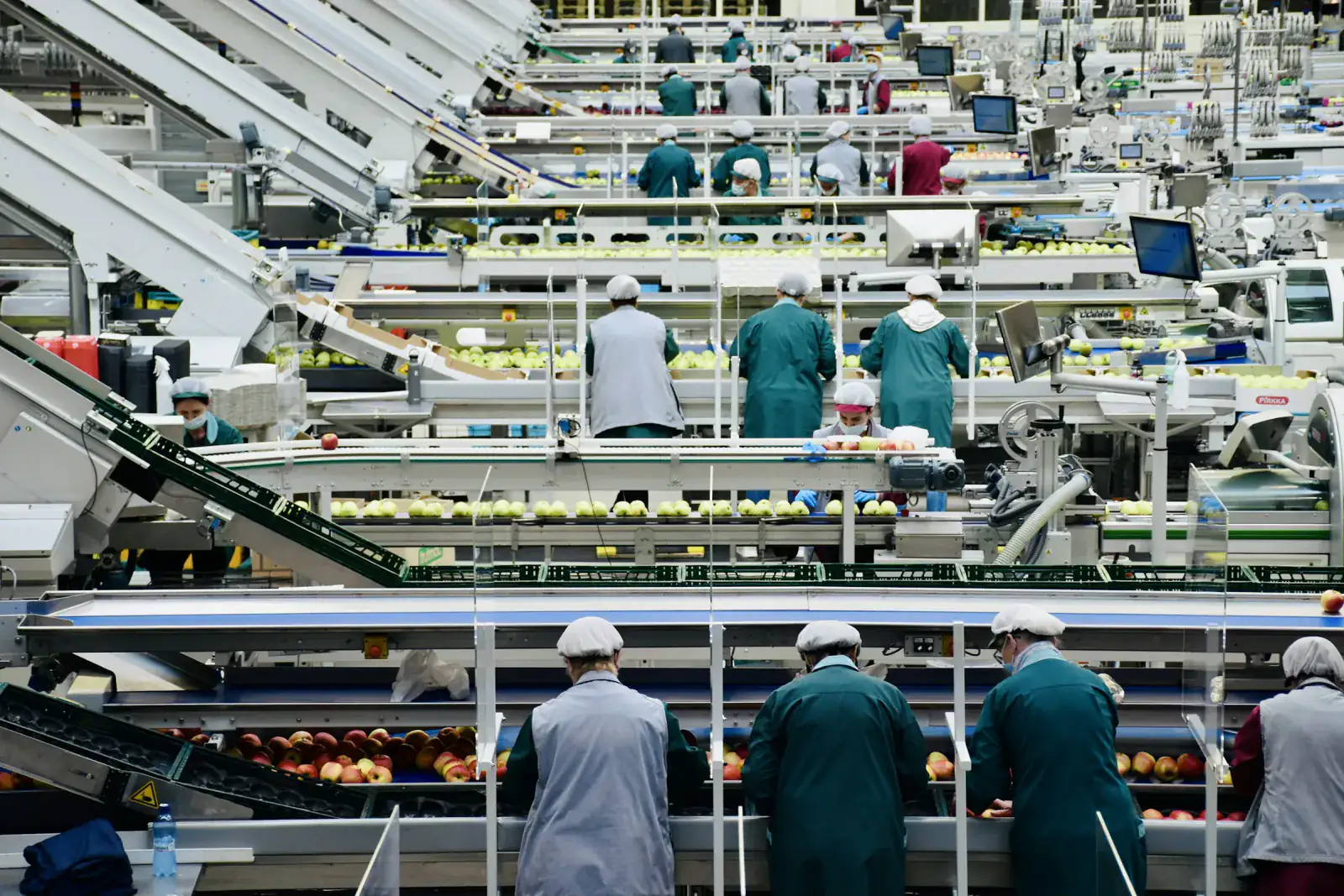
Why is food safety the first value question?
A food manufacturer that cannot demonstrate safe production does not keep its customers for long. That makes food safety a value question before it is a compliance one.
The legal baseline is the Australia New Zealand Food Standards Code. Its food safety standards include Standard 3.2.2 Food Safety Practices and General Requirements and Standard 3.2.3 Food Premises and Equipment. Under clause 12 of Standard 3.2.2, food manufacturers, wholesale suppliers and importers must have a written system for recalling unsafe food. Some sectors carry state licensing on top: the NSW Food Authority, for example, licenses businesses in the meat, dairy, seafood, egg and certain plant products sectors.
Major retailers then set their own bar. Woolworths' Supplier Excellence program, for example, requires food manufacturers to be certified to a Global Food Safety Initiative (GFSI) benchmarked standard or the Woolworths Base Standard, with codes of practice and product specifications layered on top. GFSI-recognised schemes include SQF, BRCGS and FSSC 22000, and like most food safety systems they are built around HACCP, the hazard analysis approach set out in the Codex Alimentarius General Principles of Food Hygiene.
For a valuation we ask for the current certificates, the last two or three audit reports and the grades achieved, any major non-conformances and how they were closed, customer complaints, and every withdrawal or recall. Clean audits and no recalls support a buyer's confidence in the earnings. A recent recall, a downgraded audit or a lapsed certificate raises the risk sharply, because losing a retailer approval can remove a large share of revenue overnight.
How much of the business depends on the supermarkets?
Australian grocery retail is dominated by Coles and Woolworths, as the ACCC's supermarkets inquiry found in its final report released in March 2025. For many food manufacturers, one or both of them account for a large share of sales, directly or through private label. That brings volume and scale. It also brings range reviews that can delete a product, trade terms negotiated each year, promotional programs the supplier helps fund, and a customer with considerable bargaining power.
From 1 April 2025 the Food and Grocery Code, made under the Competition and Consumer Act 2010 (Cth), became mandatory for grocery businesses with annual revenue over $5 billion, currently Aldi, Coles, Metcash and Woolworths. It sets rules for how those businesses deal with their suppliers. It does not remove the commercial risk of a product being deleted in a range review, and that risk stays with the manufacturer.
We look at sales by customer and by product for at least three years, the terms of trade with each major retailer, the history of range reviews, and how much of gross sales goes back to the retailer as rebates, promotional funding and other trade spend. Gross sales that look healthy can hide a much weaker net position. Our article on customer concentration explains how we weigh a dominant customer.
Prefer to talk? 0433 475 518
Own brand, private label and co-packing
Three business models can share one factory, and buyers value them differently.
- Own brands. The business owns the brand, the recipes and the consumer demand. Value depends on brand strength, distribution and whether shoppers would follow the brand if one retailer dropped it. Trade marks and formulations are assets in their own right.
- Private label. The business makes a retailer's own-brand products to the retailer's specification. Volumes can be large and steady, but the retailer owns the brand and can re-tender the supply. The contract term, tender history and who owns the specification matter most.
- Co-packing and contract manufacturing. The business makes products for other brand owners. Value depends on the agreements: term, volume commitments, who owns the formulations and any customer-specific equipment, and how easily the brand owner could move production elsewhere.
Many manufacturers do all three. We separate revenue and margin for each where the records allow, because a business that is mostly private label carries a different risk from one built on its own brands.
Shelf-life stock and working capital
Food inventory has a clock on it. Under Standard 1.2.5 of the Food Standards Code, packaged food generally carries either a use-by date, which is about safety and after which the food must not be sold, or a best-before date, which is about quality. Finished goods close to their date, and ingredients nearing expiry, are worth less than they cost.
We ask for a stock ageing report with dates and look for finished goods with little shelf life left, packaging and labels for products that have been deleted or redesigned, ingredients bought ahead for a contract that ended, and seasonal builds such as Christmas lines held at the balance date. Under AASB 102 Inventories these should be carried at the lower of cost and net realisable value, but the write-downs are not always booked when they should be.
Debtors matter too. Retailer payment terms, deductions taken from remittances and disputed claims can tie up more cash than the ageing report suggests. Our article on working capital explains how we set the normal level a buyer will expect.
Margins, input costs and the price-increase lag
Food manufacturers buy ingredients whose prices follow harvests, global commodity markets and the exchange rate, plus packaging and energy. They sell to customers who agree price increases slowly and on their own timetable. The lag between a cost rise and a price increase taking effect can cost months of margin.
We look at gross margin by month across at least three years, the history of price increase requests and how long each took to land, and any contracts with cost pass-through mechanisms. A business that held its margin through recent ingredient and energy increases has shown something a buyer values. One that absorbed them may still be catching up, and its latest earnings may not yet reflect where its costs now sit.
Site, plant and capacity
Food premises are expensive to build and to keep compliant. Floors, drains, wash-down areas, allergen segregation, cold rooms and blast freezers, and a layout that keeps raw and cooked product apart are all part of what lets the business operate under Standard 3.2.3 and pass its customers' audits. A compliant site on a long lease is an advantage a competitor cannot quickly match. A site that needs a major upgrade to keep its certification is a cost the buyer will deduct.
We also look at line capacity and utilisation, the number of shifts worked, changeover time between products, yield and waste. A plant with spare capacity and a real customer pipeline can grow without capex; one running flat out needs investment first. Many production employees are covered by the Food, Beverage and Tobacco Manufacturing Award 2020 (MA000073), and casual and seasonal staffing patterns affect both cost and reliability.
How the value comes together
For an established food manufacturer we usually capitalise maintainable earnings, after adjusting for misclassified trade spend, stock write-downs that were missed or bunched into one year, owner costs, and one-off events such as a recall or a lost contract. Where a major contract is starting or ending, or a new line is being commissioned, a forecast-based method may carry more weight. The methods are explained on our how we value page, and the general manufacturing approach in our manufacturing guide.
The risk assessment then weighs customer concentration, food safety standing, the brand or contract position and the condition of the site. For buyers looking at a food business, our acquisition valuation page explains how we help test a price before you commit.
Most food business valuations are completed from documents and conversations. Once engaged, you upload documents through the private link on your matter, never by email. Your information stays confidential, and we can sign a confidentiality undertaking before sensitive documents such as recipes or retailer terms are shared.
Documents we usually ask for from a food manufacturing business
- Financial statements for three years and the current year to date
- Sales by customer and by product for three years, gross and net of trade spend
- Trading terms and rebate agreements with major retailers and distributors
- Private label supply agreements and co-packing contracts
- Food safety certificates and the last two or three audit reports
- Recall, withdrawal and customer complaint records
- State food licences held, where your sector requires them
- Stock ageing report with use-by and best-before dates
- Plant register, line capacities and shift patterns
- Premises lease and any planned site upgrades
- Trade mark registrations and who owns each recipe or formulation
- Employee list with roles, pay, award or agreement coverage and leave balances
Documents come only through the private upload link on your matter, never by email and never through this website.
How we value it, and what it costs
Smaller industrial business
Annual turnover under $2 million
From $1,495 + GST
Report in 2 business days
Established industrial business
Annual turnover $2 million to $10 million
From $2,495 + GST
Report in 3 business days
Complex industrial business
Annual turnover over $10 million, or a complex structure
From $3,495 + GST
Delivery agreed before we start
Independent expert and complex matters
Disputes, litigation support, complex groups and highly specialised matters
Quoted individually
Delivery agreed before we start
We confirm the fee in writing before we start. No hourly billing. Delivery time starts once payment and all required information have been received. How our fees work
Food manufacturing valuation questions
How much is my food manufacturing business worth?
A food manufacturer is valued on its earnings after trade spend and realistic stock write-offs, priced for the risks that come with food: customer concentration, audit and recall history, shelf-life inventory and margin pressure. A strong brand or a long supply contract supports value. Dependence on one retailer's range decision weighs on it.
We supply Coles or Woolworths. Is that good or bad for value?
Both. Supermarket ranging brings volume and shows the business can meet demanding standards. Heavy dependence on one retailer also means a range review or re-tender could remove a large share of sales. We look at the length of the relationship, the terms and how much of the business it represents.
How do food safety audits affect the valuation?
Directly. Certification and audit results decide whether the business can keep supplying major customers. Clean audits and no recalls support the earnings. A recent recall, a downgraded audit or a lapsed certificate increases the risk a buyer prices, and may call for a closer look at the site and its systems.
Is a private label contract worth as much as our own brand?
Usually not. The retailer owns a private label brand and can move the supply. Your own brand, recipes and consumer demand belong to the business. Private label can still carry good value where contracts are long, the relationship is well established and the product is hard to make elsewhere.
How is short-dated stock treated?
At what it would realise, not what it cost. Stock near its best-before date, packaging for deleted products and ingredients with no remaining use are written down to net realisable value before working capital is assessed.
Do you need to visit our factory?
Usually not. Audit reports, certificates and a walk through the process on a call tell us most of what we need. If the site's condition or compliance is central to the value and the records cannot settle it, we say so when scoping and agree any visit and its cost first.
What does it cost and how long does it take?
Turnover under $2 million: From $1,495 + GST, delivered in 2 business days. Larger manufacturers and complex structures sit in the higher bands on our pricing page. Delivery time starts once payment and all required information have been received. If the brand, trade marks or recipes are held outside the operating company, each additional entity is $795 + GST. We confirm the fee in writing before we start. No hourly billing.
Short answers for food manufacturing businesses
- How much is my manufacturing business worth?A manufacturing business is usually worth the earnings it can sustain, after a realistic allowance for replacing its plant, capitalised at a rate...
- How is a contract manufacturer valued?A contract manufacturer is valued on the earnings its supply agreements can sustain, after the capital spending its lines need. Buyers focus on how...
- What documents do I need to value a manufacturing business?Start with three years of financial statements, year-to-date management accounts and tax returns. For a manufacturer, add the plant and equipment...
- How is a CNC machining or precision engineering business valued?A CNC machining or precision engineering business is valued on the earnings it can sustain after the cost of keeping its machines current. The main...
- Does machinery add to the value of my business?No, not on top of the earnings it helps produce. Machinery the business needs is already inside an earnings-based value, so owning plant worth $3...
- What EBITDA multiple is a manufacturing business worth?There is no standard EBITDA multiple for a manufacturing business. The multiple is the result of a valuation, not an input. It rises with scale...