
What does a buyer of a mining services business pay for?
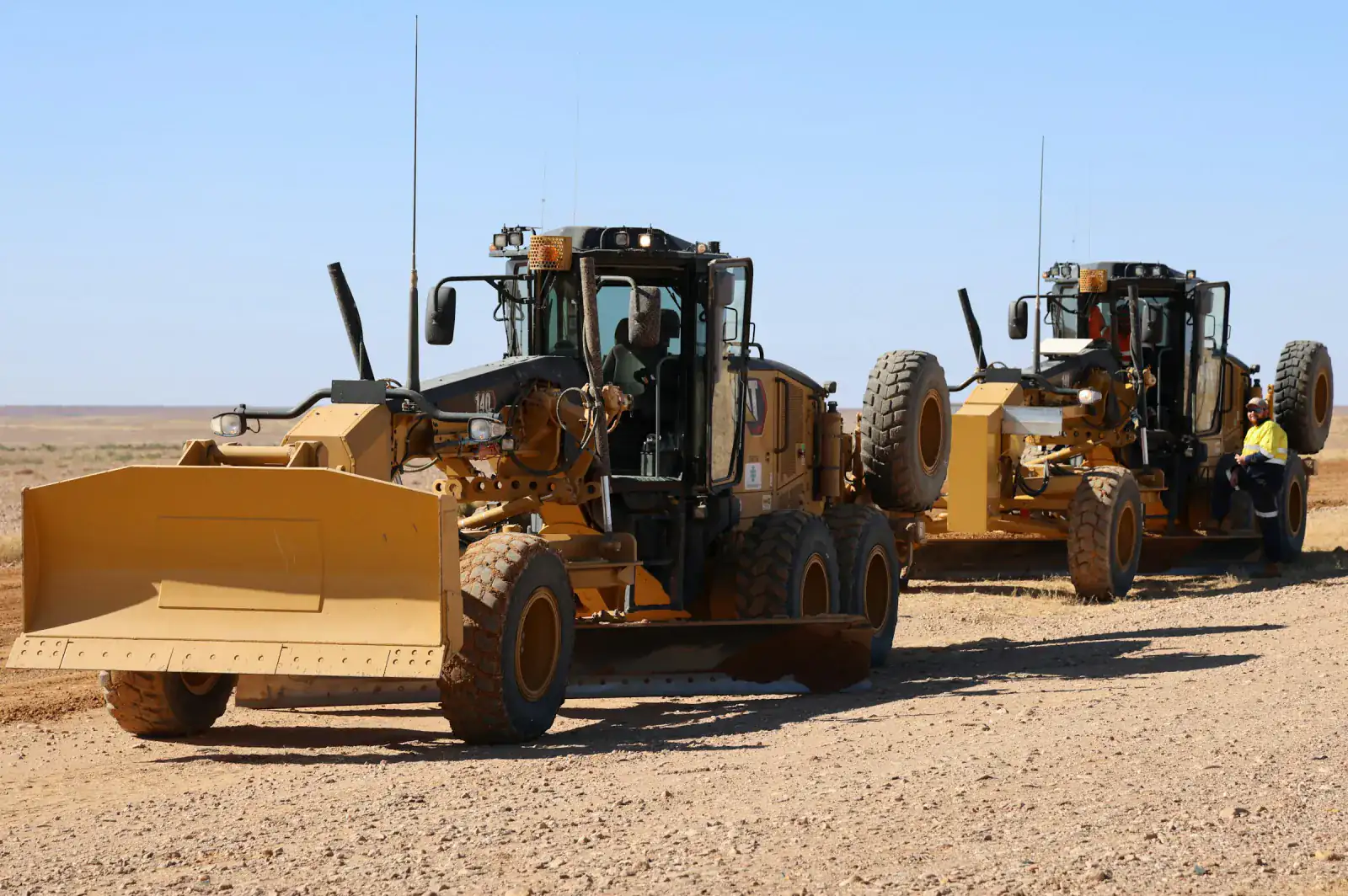
Not the yellow iron. Plant can be bought at auction or financed from a dealer. What a buyer cannot buy off the shelf is the right to keep working on sites: a place on a major's contractor list, crews who are inducted and known on site, a safety record that survives audit, and the confidence of the superintendent who decides who gets the next work order.
Picture two contractors. One has three-year agreements with two majors across four sites, a fleet with sensible hours and a manager who runs the business day to day. The other has one principal, one site, ageing plant on finance and an owner who prices every job. Their profit and loss statements can look alike for years; the illustrative example on this page puts numbers on the difference.
Our job is to work out which business we are looking at and reflect it in the earnings we treat as maintainable and the rate we capitalise them at. The general methods are in how we value industrial businesses; this page covers what is different about mining services.
How are MSAs and work orders with the majors treated?
Most work for the large miners runs under a master services agreement (MSA) or a similar framework contract. The MSA sets the schedule of rates, insurance, liability, safety obligations and payment terms. The volume usually arrives separately, through purchase orders, work orders or call-offs that the principal issues as it needs them. An MSA on its own is a licence to quote, not a revenue stream.
So we read the agreement and then follow the money. We reconcile revenue by principal and site to the purchase orders behind it, and we look at how long each relationship has run and how many times it has been renewed or retendered. A contractor that has been reappointed through two tender rounds has shown something a new entrant cannot.
| Term | Why it matters to value |
|---|---|
| Term remaining and extension options | Work with less than a year to run before retender carries more risk than work with options in the contractor's favour. |
| Termination for convenience | If the principal can end the agreement on short notice without cause, the contract supports less value than its face suggests. |
| Change of control or assignment clause | A sale of shares can trigger a right to terminate or a need for consent. Buyers will ask, and so do we. |
| Rate review or rise and fall | Without a mechanism to recover wage and fuel increases, margin erodes over the life of the agreement. |
| Liability caps, liquidated damages and indemnities | Uncapped exposure on a mine site is a contingent risk that a buyer will price or require insured. |
| Payment terms | Long terms set by the principal tie up working capital, which affects the cash a buyer needs on day one. |
Not every MSA is a discount. A long relationship with rates that move with costs, renewed several times across sites, is a strength.
Prefer to talk? 0433 475 518
One customer, one site, one commodity
Concentration in mining services is rarely just one large customer. It is often one customer, at one site, producing one commodity. If the principal decides to bring maintenance in house, the site goes into care and maintenance, or the commodity price drops far enough to cut contractor spend, all three hit at once.
We look at concentration in layers: by principal, site, commodity and type of work. A contractor with 55% of revenue from one major, spread across three sites and two commodities, is more resilient than the headline suggests. One with 35% from a small operator running a single mine may be less resilient than it looks, because that operator's financing and mine life become part of the risk.
Buyers handle concentration in the price, the deal structure or both: a lower upfront figure, an earn-out tied to renewal of the key contract, or a condition that the principal consents to the change of ownership. See how customer concentration affects business value.
What are maintainable earnings in a cyclical industry?
A valuation capitalises earnings the business can reasonably sustain, not its best year. In mining services the best year is often the one when commodity prices peaked, principals ran every machine and overtime was everywhere. Use that year as maintainable earnings and the value is overstated.
We look at three to five years of results, then ask what kind of work produced them. Sustaining work at operating mines (planned maintenance, component change-outs, shutdowns on fixed plant, consumables supply) continues through most of the cycle, because the mine still has to run. Expansion and construction work (new plant, pre-strip, project labour) is what principals defer first when prices fall or capital budgets tighten. A business with mostly sustaining work deserves more weight on its recent earnings than one riding a project wave.
- Revenue and margin by year, split between sustaining and project work
- Crew and fleet utilisation by year, so we can see whether earnings came from capacity or from rates
- Rates achieved against rates in the current agreements, to test whether recent margins will hold
- Exposure by commodity, because iron ore, coal, gold, lithium and base metals do not move together
Where one contract with a defined end dominates, an average of past earnings can mislead. A discounted cash flow over the remaining term, with an explicit view of what comes after, may be the better primary method.
Plant on site: owned, financed, hired and mine-spec
Plant is what the business needs to earn its income. If the earnings already reflect the use of that fleet, the fleet is inside the value, not on top of it. The exception is surplus plant that is not needed to earn the income, which can be added separately.
Mine sites set their own standards for vehicles and plant, which makes mine-spec equipment dearer to buy and keep compliant. Component life drives cost more than age: a machine approaching a major engine, transmission or undercarriage rebuild is a cash call the buyer inherits.
Equipment finance also changes the picture. Chattel mortgages, hire purchase and finance leases are debt-like: the business carries them and the buyer will deduct them from the price, along with any balloon payments that fall due. We look at the fleet register, the hours, the finance schedule and the capex history together, so the earnings we capitalise are struck after a realistic level of sustaining capex.
FIFO crews, rosters and the people the principal asks for
Labour is usually the largest cost and the hardest to replace. FIFO and DIDO rosters mean recruitment, inductions, medicals, travel, accommodation and allowances. We check which of those costs the contracts pass through and which the contractor absorbs, because that decides whether the margin survives a tight labour market.
We also look at how the workforce is engaged. A business that self-performs with employed tradespeople under an enterprise agreement or award has different economics from one that supplies labour hire at a margin. Labour hire revenue can be large and the margin thin; a buyer will look straight through the revenue to the margin per hour.
Then there are the people the principal asks for by name: the supervisor who has run the same shutdown for six years, the planner who knows the plant, the owner who takes the superintendent's calls. If none of them is tied to the business, a buyer will want them retained through the sale or will pay less.
Safety, prequalification and the right to be on site
A contractor works inside the principal's safety system, and the law says so. In Queensland, a contractor at a coal mine must comply with the mine's safety and health management system and cannot start work until it has given the site senior executive a safety and health management plan, under the Coal Mining Safety and Health Act 1999 (Qld). In Western Australia, mines have been covered by the Work Health and Safety Act 2020 (WA) and the Work Health and Safety (Mines) Regulations 2022 from 31 March 2022.
On top of the law sit the majors' own prequalification systems, contractor audits and site rules. Certification to ISO 45001 for safety, and ISO 9001 and ISO 14001 for quality and environment, is commonly expected before a contractor is considered for larger work. Losing prequalification, or being stood down after a serious incident, can remove a principal's revenue within days.
So we ask for injury frequency rates over several years, the incident register, recent audit results and any regulator notices. A clean, documented record is part of what a buyer pays for. A recent serious incident or an open investigation is a risk we reflect in the earnings, the rate or a clear statement in the report.
How we put a mining services valuation together
- Normalise the earnings: owner wages to market, one-off shutdown spikes, related-party plant hire and rent, and any personal costs.
- Test maintainability: split sustaining from project work, check utilisation and rates against the current contracts, and form a view across the cycle.
- Deduct a realistic level of sustaining capex, treat equipment finance and balloons as debt, and set the normal working capital the business needs, allowing for unapproved timesheets, retentions and principals' payment terms.
- Assess risk in the rate: contract tenure, concentration by principal, site and commodity, labour depth, safety record and owner dependency.
- Cross-check: against discounted cash flow where one contract dominates, and against net assets where plant value may exceed what the earnings support.
Fees are fixed and confirmed before we start. See pricing for the bands, or get a quote and tell us about the business. If you are preparing for a sale, our business sale valuation page explains what buyers will test, and the mining services valuation guide goes further into the method.
Documents we usually ask for from a mining services business
- Financial statements for the last three years and year-to-date management accounts
- Revenue by principal, site, commodity and type of work (sustaining or project) for at least three years
- Master services agreements, current purchase orders or work orders, and any extension or award letters
- Plant and vehicle register with year, hours, condition, ownership and finance details
- Equipment finance and hire agreements, with payout figures and balloon dates
- Employee list with roles, rosters, tickets, award or enterprise agreement coverage and FIFO arrangements
- Injury frequency rates and incident register for three years, recent audit results and certification status
- Aged debtors, unbilled work and retentions
- Tender pipeline, and any contracts lost or not renewed in the last three years
Documents come only through the private upload link on your matter, never by email and never through this website.
How we value it, and what it costs
Smaller industrial business
Annual turnover under $2 million
From $1,495 + GST
Report in 2 business days
Established industrial business
Annual turnover $2 million to $10 million
From $2,495 + GST
Report in 3 business days
Complex industrial business
Annual turnover over $10 million, or a complex structure
From $3,495 + GST
Delivery agreed before we start
Independent expert and complex matters
Disputes, litigation support, complex groups and highly specialised matters
Quoted individually
Delivery agreed before we start
We confirm the fee in writing before we start. No hourly billing. Delivery time starts once payment and all required information have been received. How our fees work
Mining services valuation questions
Does a master services agreement with a major miner add value?
It can, but the agreement alone is not the value. An MSA sets rates and terms; the work usually comes through separate purchase orders. We look at the work actually flowing under it, the term left, renewal history, termination rights and any change of control clause. A long, renewed relationship across several sites supports value. A single MSA with a year to run and termination on notice supports much less.
Our last year was our best ever. Will you use it?
Not on its own. We look at three to five years and ask what produced the result. If the latest year reflects peak conditions unlikely to last, we normalise it. If it reflects new contracts already in place for the coming years, we give it more weight and explain why.
Our fleet is worth more than the business earns. What happens then?
Then the net value of the assets may set a floor, and we test it. If the plant would sell for more than the business is worth as a going concern, the valuation should say so. We rely on a formal plant and machinery valuation for that figure where one exists; we do not value individual machines ourselves.
Do you need to come to site?
Usually not. Most valuations are completed from documents and conversations with the owner and management. If the operation or the equipment needs to be seen, we say so when we scope the work and agree any visit and its cost with you first.
Can you value a shareholder's interest in a mining services company?
Yes. Exits are common in contracting businesses where one founder wants to retire and another wants to keep going. We value the whole business, then consider the interest, the shareholders agreement and whether a minority discount applies. See shareholder valuation.
How much does a mining services business valuation cost, and how long does it take?
Turnover under $2 million: From $1,495 + GST, delivered in 2 business days. Larger contractors and complex structures sit in the higher bands on our pricing page. Delivery time starts once payment and all required information have been received. Where the owners hire plant back to the contractor through a related entity, each additional entity is $795 + GST. We confirm the fee in writing before we start. No hourly billing.
Short answers for mining services businesses
- How is a trucking or transport company valued?A trucking company is valued on the earnings left after properly funding its fleet, not on EBITDA or the resale value of its trucks. The biggest...
- How does relying on one major customer affect my business value?Relying on one major customer usually lowers value, because a single decision by that customer could remove a large share of profit while overheads...
- How is a CNC machining or precision engineering business valued?A CNC machining or precision engineering business is valued on the earnings it can sustain after the cost of keeping its machines current. The main...
- Does machinery add to the value of my business?No, not on top of the earnings it helps produce. Machinery the business needs is already inside an earnings-based value, so owning plant worth $3...