
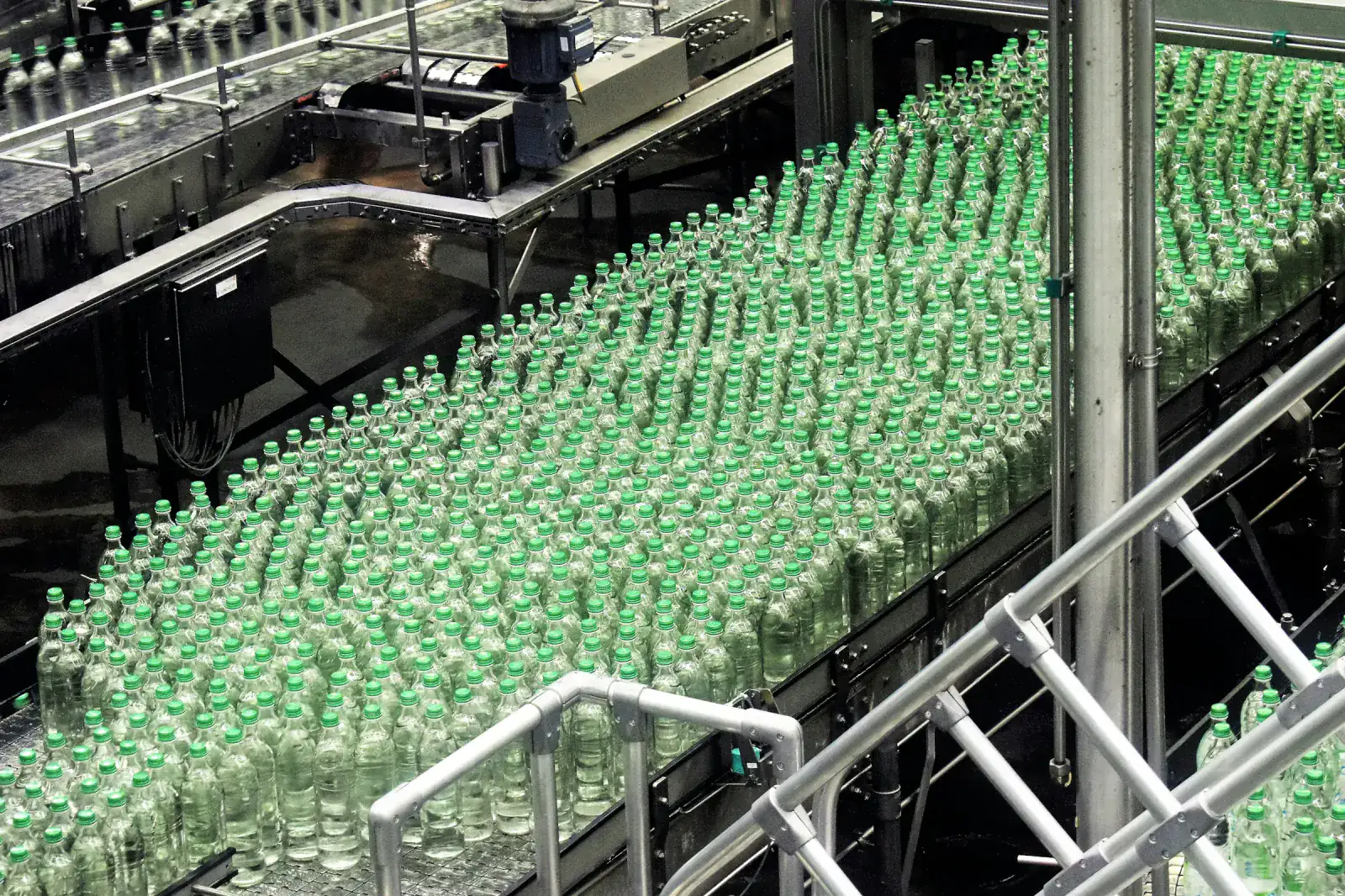
What kind of packaging business is it?
Packaging is a group of quite different manufacturing businesses that happen to share end customers. In the ANZSIC classification, paper and board packaging sits within pulp, paper and converted paper product manufacturing, and plastic packaging within polymer product and rubber product manufacturing. In practice we see:
- Corrugated and folding carton converters, buying board and turning it into shipping cartons, retail cartons, displays and shelf-ready packaging
- Flexible packaging: film extrusion, printing, laminating and pouch making
- Rigid plastics: injection moulding, blow moulding and thermoforming of containers, closures, trays and tubs
- Labels and printed packaging, where print technology and run length drive the economics
- Packaging distributors, who buy and hold stock for many smaller customers (see our wholesale and distribution page)
Each has its own capital intensity, input cost profile and customer base. A thermoformer supplying food processors under long contracts and a short-run digital label printer are not valued the same way.
Resin, board and the pass-through lag
Raw material is usually the largest cost in a packaging business. Polymer resin prices follow global petrochemical markets and the exchange rate. Board and paper prices follow pulp markets and mill pricing. Both can move sharply within a year.
What matters for value is not the price movement itself but how the business passes it on. We read the customer agreements for rise-and-fall or index clauses, how often prices reset (monthly, quarterly or on notice), and the lag between a supplier increase and the customer price change. In a rising market, a quarterly reset leaves the business funding the difference. In a falling market the same lag produces a temporary windfall.
That makes recent margins unreliable on their own. Where the records go back far enough, we look at gross margin per tonne or per unit over a full price cycle, and separate stock holding gains and losses from the underlying conversion margin. A buyer will pay for the conversion margin, not for a year in which resin happened to fall. The illustrative example on this page puts numbers on the lag.
Prefer to talk? 0433 475 518
Long runs, short runs and machine utilisation
Packaging lines make money while they run good product. Every changeover, whether new dies, new print plates, a colour change, a mould swap or a resin purge, is lost output. Long runs of a few high-volume products fill machines efficiently but tie the business to the customers who order them. Short runs serve more customers at better prices per unit, but only if changeovers are quick and the pricing covers the downtime.
We look at capacity utilisation by line, the shifts worked, changeover and downtime records, scrap and waste rates, and how the business prices short runs. Overall equipment effectiveness, where it is tracked, is a useful summary. A plant running three shifts at high utilisation has little room to grow without capex. A plant running one shift can take on volume at a low marginal cost, which a buyer may value if the demand is real and not just hoped for.
How much do customer contracts matter?
Packaging businesses often depend on a handful of large customers: food and beverage manufacturers, household product brands, agricultural exporters. One customer can easily account for a large share of volume. What holds that customer in place matters more than its size.
- Term and volume. Is there a supply agreement with a defined term and committed or forecast volumes, or does the customer order against purchase orders and re-quote every year?
- Switching cost. Packaging that has been through customer trials, artwork approval, filling-line testing or food-contact compliance work is slower to move to a competitor.
- Price mechanism. Contracts with input cost pass-through protect margin. Fixed prices without one leave the business carrying the risk.
- Change of control. Some supply agreements allow the customer to terminate if the packaging business is sold.
Retailers set requirements for packaging as well. Woolworths' Supplier Excellence program, for example, covers packaging within its requirements for non-food and consumer goods. We ask which customers audit the business and what approvals it holds. Our article on customer concentration explains how we weigh a dominant customer, and our food manufacturing page covers the customers many packaging businesses serve.
Who owns the tooling?
Injection moulds, blow moulds, thermoforming tools, cutting dies and print plates can cost anything from a few hundred dollars to several hundred thousand. Ownership is often unclear in practice. The common arrangements:
- Customer-owned tooling. The customer paid for the tool, up front or amortised in the unit price. The packaging business holds and maintains it, but the customer can take it to a competitor.
- Company-owned tooling. The business paid for the tool and recovers the cost through its pricing. It is an asset of the business, but often useful for only one customer's product.
- Shared or undocumented. Tools paid for partly by each side, or with nothing in writing. These are where disputes start when a customer leaves or the business is sold.
Tooling affects value in three ways: whether the balance sheet includes assets that really belong to customers (or leaves out ones that belong to the business), how easily a customer can move, and who pays when a tool wears out. We ask for a tooling register showing each tool, its owner, the customer it serves and who funds its maintenance and replacement.
Packaging regulation and recyclability
Packaging carries obligations that shape its customers' choices. Under the National Environment Protection (Used Packaging Materials) Measure 2011, brand owners with annual turnover of $5 million or more must either join the Australian Packaging Covenant or meet their state or territory's requirements. Environment ministers agreed in 2022 to reform packaging regulation so that packaging is designed to be recovered, reused, recycled or reprocessed safely. The Commonwealth consulted on reform options in October 2024, and its environment department states that the existing co-regulatory arrangement remains in place while options are explored. It has also developed a Design for Kerbside Recyclability Grading Framework, with no decision yet on how it will be used.
For a valuation, the question is how exposed the product range is to customers changing their packaging. Formats that are hard to recover through kerbside recycling may lose demand as brand owners redesign. Businesses already making recyclable or recycled-content formats, or with equipment that can switch, may gain. We look at the product mix, what key customers are saying about redesign, and the capex a change in materials would need. We do not forecast regulation, but we do ask whether the earnings depend on formats under pressure.
Plant, capex and how the value comes together
Packaging is capital intensive. Presses, extruders, laminators, moulding machines, die cutters and corrugators are expensive, and productivity depends heavily on their age. We look at the asset register, the age of the machines that set throughput, maintenance history, energy use (a large cost in extrusion and moulding), and the replacement the next three to five years will need.
Capitalisation of maintainable earnings is the usual primary method, with earnings normalised across the input cost cycle and struck after sustaining capex. Where earnings are thin relative to a large plant, we cross-check against the net value of the assets. As with any manufacturer, the presses are not counted again on top of the earnings they generate. Our manufacturing guide covers the general approach, and our how we value page the methods.
Line data, the asset register and a conversation with the production manager normally give us what we need without a site visit. If the plant does need to be seen, we say so when scoping and agree any visit and its cost first. Customer agreements and margin data are commercially sensitive: they come through the private upload link on your matter, never by email, and stay confidential.
Documents we usually ask for from a packaging business
- Financial statements for three years and the current year to date
- Sales and gross margin by customer and product line, per tonne or per unit if available
- Customer supply agreements, including price adjustment and termination clauses
- Raw material purchase history for resin, board or film
- Tooling register showing owner, customer and who funds maintenance
- Plant register with machine ages, capacities and shift patterns
- Utilisation, downtime and scrap records
- Equipment finance and lease schedules
- Stock ageing, including customer-specific stock held on consignment or call-off
- Certifications held and customer audit results
- Packaging Covenant membership and reporting, if the business is a brand owner
- Premises lease and energy contracts
Documents come only through the private upload link on your matter, never by email and never through this website.
How we value it, and what it costs
Smaller industrial business
Annual turnover under $2 million
From $1,495 + GST
Report in 2 business days
Established industrial business
Annual turnover $2 million to $10 million
From $2,495 + GST
Report in 3 business days
Complex industrial business
Annual turnover over $10 million, or a complex structure
From $3,495 + GST
Delivery agreed before we start
Independent expert and complex matters
Disputes, litigation support, complex groups and highly specialised matters
Quoted individually
Delivery agreed before we start
We confirm the fee in writing before we start. No hourly billing. Delivery time starts once payment and all required information have been received. How our fees work
Packaging valuation questions
What is a packaging business worth?
A packaging business is valued on the conversion margin it earns across the resin and board price cycle, not in the year input prices happened to fall. How safe that margin is depends on pass-through clauses in its contracts, the condition and utilisation of the plant and who owns the tooling. A converter whose contracts reset prices each quarter carries far less of the cycle than one that re-quotes every year.
Resin prices fell last year and our profit jumped. Will the valuation use that profit?
Not all of it. Part of a profit increase driven by falling input costs is usually a timing gain that reverses when prices rise again. We normalise earnings across the cycle, so the valuation reflects the margin the business can sustain.
Do customer-owned moulds affect the valuation?
Yes. They are not assets of the business, and they make it easier for a customer to move production. If tools the business paid for are recorded as customer property, or the reverse, we correct it. A clear tooling register helps.
How do the Packaging Covenant and packaging reform affect value?
Mainly through customers. Brand owners above the turnover threshold have obligations under the co-regulatory arrangement, and many are redesigning packaging for recyclability. We look at whether the product range depends on formats under pressure and what capex a change would need. We do not forecast regulation.
Is our plant added to the value of the business?
Not on top of the earnings it produces. A corrugator or moulding machine running your customers' work is already paid for out of the profit it helps make. Its age and condition matter because they drive future capex. Machines that sit idle can be added at what they would realise.
How much does a packaging business valuation cost, and how long does it take?
Turnover under $2 million: From $1,495 + GST, delivered in 2 business days. Larger converters and complex structures sit in the higher bands on our pricing page. Delivery time starts once payment and all required information have been received. Plant or tooling held in a related entity adds $795 + GST per entity, and a second valuation date for a restructure is $495 + GST. We confirm the fee in writing before we start. No hourly billing.
Short answers for packaging businesses
- How much is my manufacturing business worth?A manufacturing business is usually worth the earnings it can sustain, after a realistic allowance for replacing its plant, capitalised at a rate...
- How is a contract manufacturer valued?A contract manufacturer is valued on the earnings its supply agreements can sustain, after the capital spending its lines need. Buyers focus on how...
- How does relying on one major customer affect my business value?Relying on one major customer usually lowers value, because a single decision by that customer could remove a large share of profit while overheads...
- How is a CNC machining or precision engineering business valued?A CNC machining or precision engineering business is valued on the earnings it can sustain after the cost of keeping its machines current. The main...
- Does machinery add to the value of my business?No, not on top of the earnings it helps produce. Machinery the business needs is already inside an earnings-based value, so owning plant worth $3...
- What EBITDA multiple is a manufacturing business worth?There is no standard EBITDA multiple for a manufacturing business. The multiple is the result of a valuation, not an input. It rises with scale...