
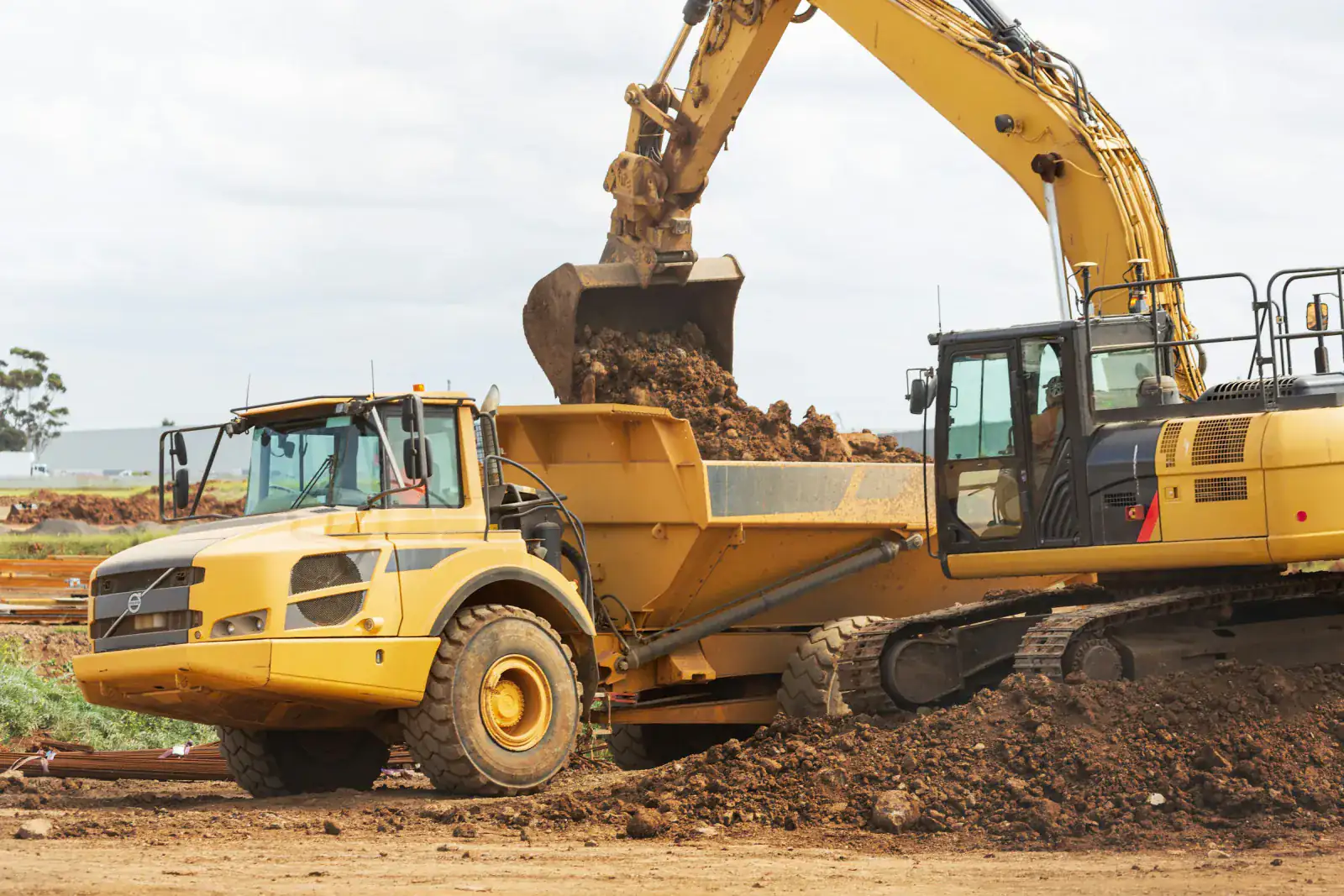
Dealer, hire company or repairer?
Businesses built around machinery look alike from the front gate. They are valued very differently. Before we look at a single number we work out which of these the business is, or which mix:
| Business type | How it earns | What drives value |
|---|---|---|
| Machinery dealer | Margin on new and used machine sales, plus parts, service and finance commissions | The dealer agreement, territory, parts and service base, floor plan terms |
| Equipment hire | Rental income from a fleet, with or without operators | Utilisation, hire rates, fleet age and replacement cost, finance, customer mix |
| Repair and service | Labour and parts on customers' machines, in the workshop or in the field | Technician capacity, manufacturer authorisations, repeat customers, service vehicles |
| Machinery manufacturer or rebuilder | Building or remanufacturing machines and attachments | Product range, IP, dealer network, warranty exposure |
Plenty of businesses combine two or three. A regional dealer with a hire fleet and a mobile service team has three revenue streams with different risks, and we look at each before putting them back together. Machinery manufacturers are covered in our manufacturing guide.
Why EBITDA overstates an equipment business
In an equipment hire business the fleet is the product. Every machine wears out and has to be replaced, and that replacement is the main cost of staying in business. EBITDA leaves it out completely. A fleet that averages ten years old is about to cost its next owner a great deal of money, and nothing in EBITDA will show it.
Book depreciation does not fix the problem. It is based on what the machines cost, often years ago, over lives set for accounting or tax. Replacement happens at today's prices, which are usually higher. So we estimate what it would cost each year to keep the fleet at its current age and size, and value the earnings after that charge.
We then look at the fleet itself: the age profile, hours or kilometres, how resale values have held for each class of machine, and whether replacement has been deferred to lift short-term profit. A fleet that is overdue for renewal hands that bill to the buyer. Our article on EBITDA versus EBIT explains the general point.
Prefer to talk? 0433 475 518
What does fleet utilisation tell a buyer?
Utilisation is the hire industry's core measure. Time utilisation is the share of available days a machine is on hire. Dollar utilisation is rental revenue as a share of the fleet's cost, which also captures the rates being achieved. A business can keep its machines busy at rates too low to fund their replacement, and time utilisation alone will not show it.
We ask for utilisation by machine class, not just for the fleet as a whole. It is common to find a core of hard-working machines carrying a tail of specialised or ageing units that rarely go out. Those idle machines may be surplus to the business: they can be valued at what they would realise, and the earnings assessed without them.
Revenue from damage waivers, delivery and collection, fuel, operators and consumables sits alongside hire rates. It is worth understanding separately, because it behaves differently from hire income when the market softens.
Valuing a machinery dealership
For a dealer, the most important document is often the dealer agreement with the manufacturer or importer. It sets the territory, the term, stocking and facility requirements, performance targets and, critically, whether the manufacturer must consent to a change in ownership. A dealership whose agreement can be ended on short notice, or whose sale needs an approval the manufacturer may withhold, carries that risk in its value.
Inside the dealership, we look at the balance between machine sales and the aftermarket. New machine margins are thin and cyclical, and used machines carry the risk of overvalued trade-ins. Parts and service income is steadier and earns better margins. The share of the dealer's fixed overheads it covers, often called service absorption, is a good indicator of how the business would cope with a bad year for sales.
Stock is the other big issue. Machines held on floor plan finance, aged used stock carried at trade-in values and slow-moving parts all need testing against what they would actually realise. We value inventory at a realistic level and treat floor plan finance consistently with how it is used in the business.
How finance changes what the owners receive
Equipment businesses are usually financed through chattel mortgages, hire purchase, finance leases and, for dealers, floor plan facilities. The enterprise value we assess is the value of the operating business. Finance owed is then deducted to reach the value of the shares, including balloon or residual payments that fall due at the end of a contract.
Two practical points. First, the accounting varies: under AASB 16 Leases a lessee brings most leases onto the balance sheet, while some smaller businesses still expense lease payments, so we put earnings and debt on the same basis before comparing anything. Second, equipment finance often carries security over the machines and personal guarantees from the owners, which affects how a sale is structured and what has to be paid out at completion.
Hire businesses also need to protect their own machines while they are out on hire. As the PPSR's guidance for hire and rental businesses explains, a hire company that has not registered its interest risks losing equipment to other creditors if a customer becomes insolvent. We ask how long-term hires are protected, because unprotected assets are a risk a buyer will price.
Business valuation or plant and machinery valuation?
Owners of equipment-heavy businesses often ask whether they need a valuation of the business or of the machines. They are different jobs. A plant and machinery valuation, done by a plant and machinery valuer, values each asset, typically for finance, insurance or a sale of assets. A business valuation values the operating business as a whole, including any goodwill.
We value the business. Where a recent plant and machinery valuation exists, we use it as an input: to identify surplus machines, to support an asset-based cross-check, and to see whether the earnings justify the fleet. When they do not, which happens in businesses earning a thin return on a large fleet, the asset value rather than the earnings may set the value of the business.
Repair, service and field service businesses
A machinery repairer sells skilled labour. Value depends on technician numbers and retention, how full the workshop and service vehicles are, the effective labour rate after unbilled time, the parts margin, and authorisations from manufacturers to carry out warranty work. Warranty work brings volume, but at rates the manufacturer sets, and the business depends on the authorisation continuing.
Field service businesses add a vehicle fleet, travel time and often a concentration on a few large customers such as mine sites or councils. Service agreements with set response times are worth more than call-out work. Businesses that mainly service mine sites are covered in more depth on our mining services page, and broader maintenance contractors on our industrial services page.
A fleet register with ages and hours usually tells us what we need about the equipment, so a yard inspection is seldom necessary. Where one is, we raise it when scoping and agree the visit and its cost first. Fleet lists, finance schedules and dealer agreements go through the private upload link on your matter, not email, and are kept confidential. The methods are set out on our how we value page.
Documents we usually ask for from a machinery and equipment business
- Financial statements for three years and the current year to date
- Fleet register: make, model, year, hours or kilometres, cost and written down value
- Utilisation and hire revenue by machine class
- Fleet replacement history and planned purchases
- Equipment finance, hire purchase, lease and floor plan schedules, including balloon payments
- Dealer agreement with the manufacturer or importer, for dealerships
- Machine and parts stock lists, with ageing
- Standard hire terms and how long-term hires are registered on the PPSR
- Revenue by customer and by sector
- Technician numbers, labour rates and manufacturer authorisations
- Any recent plant and machinery valuation
Documents come only through the private upload link on your matter, never by email and never through this website.
How we value it, and what it costs
Smaller industrial business
Annual turnover under $2 million
From $1,495 + GST
Report in 2 business days
Established industrial business
Annual turnover $2 million to $10 million
From $2,495 + GST
Report in 3 business days
Complex industrial business
Annual turnover over $10 million, or a complex structure
From $3,495 + GST
Delivery agreed before we start
Independent expert and complex matters
Disputes, litigation support, complex groups and highly specialised matters
Quoted individually
Delivery agreed before we start
We confirm the fee in writing before we start. No hourly billing. Delivery time starts once payment and all required information have been received. How our fees work
Machinery and equipment valuation questions
Is my hire business worth the value of its fleet?
Sometimes, but not automatically. If the earnings after realistic fleet replacement support a value above what the fleet would realise, the business carries goodwill. If they do not, the business may be worth roughly what its equipment would realise, less what is owed on it.
Should the valuation be based on EBITDA?
Rarely on its own for an equipment business. EBITDA ignores the cost of replacing the fleet, which is the largest ongoing cost of a hire company. We value the earnings left after a realistic replacement charge, and the report explains how we set it.
How does equipment finance affect what my business is worth?
Floor plan, chattel mortgages, hire purchase and the balloon payments at the end of them are all debt, and they come off the enterprise value to reach the value of your shares. The operating business is valued the same way whether its machines are financed or owned outright. A buyer of the shares takes the finance on; a buyer of the assets expects it paid out from the price.
Does a dealer agreement have value?
Often it is the core of a dealership's value, because it carries the right to sell and service a brand in a territory. Its term, the manufacturer's termination rights and whether consent is needed for a new owner directly affect what a buyer will pay.
Do you value the individual machines?
No. We value the business. Machine-by-machine values for finance, insurance or an asset sale come from a plant and machinery valuer. If you have a recent plant and machinery valuation, we can use it as an input.
How much does a valuation cost, and how long does it take?
Turnover under $2 million: From $1,495 + GST, delivered in 2 business days. Bigger fleets and complex structures sit in the higher bands on our pricing page. Delivery time starts once payment and all required information have been received. Hire fleets are often owned or financed through a separate company or trust; each additional entity is $795 + GST. We confirm the fee in writing before we start. No hourly billing.
Short answers for machinery and equipment businesses
- How is a CNC machining or precision engineering business valued?A CNC machining or precision engineering business is valued on the earnings it can sustain after the cost of keeping its machines current. The main...
- Does machinery add to the value of my business?No, not on top of the earnings it helps produce. Machinery the business needs is already inside an earnings-based value, so owning plant worth $3...
- How much is my manufacturing business worth?A manufacturing business is usually worth the earnings it can sustain, after a realistic allowance for replacing its plant, capitalised at a rate...
- How is a contract manufacturer valued?A contract manufacturer is valued on the earnings its supply agreements can sustain, after the capital spending its lines need. Buyers focus on how...
- What EBITDA multiple is a manufacturing business worth?There is no standard EBITDA multiple for a manufacturing business. The multiple is the result of a valuation, not an input. It rises with scale...
- How much does a business valuation cost for a manufacturer or logistics company?The fee is fixed by annual turnover, not charged by the hour. Turnover under $2 million: From $1,495 + GST. Turnover $2 million to $10 million: From...