
Short answer
How is a mining services business valued?
On earnings that can be maintained through the commodity cycle, after the cost of keeping its plant working, then tested against how secure its site work is. The deciding questions are which mines and commodities it depends on, how its contracts can be ended, whether it supplies a service or labour, and what its fleet costs to keep.
Key takeaways
- Earnings need normalising across the commodity cycle and for one-off shutdown or project work. A boom year is not maintainable earnings.
- A master services agreement with no committed volume and a termination for convenience clause gives a buyer far less certainty than its length suggests.
- Where a business supplies workers rather than a scoped service, a regulated labour hire arrangement order under the Fair Work Act can lift its labour costs to the host's agreement rates.
- Mobile plant has to be assessed on its hours, component life and finance, and its purchase price does not add to an earnings-based value.
Which kinds of mining services work make up the revenue?
Mining services covers businesses that share customers but little else. Contract mining and haulage, drill and blast, shutdown and fixed plant maintenance, mobile equipment hire, site engineering and fabrication, labour supply, consumables distribution and rehabilitation each carry different capital, labour and contract risk. A valuation starts by separating the revenue into these streams, because a buyer will price each one differently.
Equipment hire shows why. Dry hire, where the client supplies the operator, is close to a rental business: value rests on utilisation, rates and the condition of the fleet. Wet hire, where the business supplies the operator and often the fuel and maintenance, adds labour, rostering and site compliance risk. Two hire businesses with identical fleets can carry quite different risk.
Our mining services business valuation guide covers the sector as a whole. This article works through the questions that most often decide the number.
How secure are the site contracts?
Mining services revenue usually sits under a master services agreement, with work issued by purchase order or work order under schedules of rates, lump sum packages for shutdowns, or cost-plus arrangements. A five-year agreement can look secure on a contract register and still guarantee nothing, because many do not commit the client to any volume at all.
We read the agreements for these points.
- Volume. Whether any minimum work or revenue is committed, or the agreement simply sets rates for work the client may choose to issue.
- Termination. Termination for convenience, the notice period, and what is paid on termination, including demobilisation and equipment brought to site for the contract.
- Rates. How and when rates are reviewed, and whether labour and fuel costs can be passed through.
- Liability. Liquidated damages, performance abatements and any uncapped indemnities.
- Assignment and change of control. Whether the client must consent if the business or its shares are sold.
Evidence of tenure often matters more than the paper. How many years the business has worked on each site, whether it has been retendered and won, and whether it is one of many on a panel or a preferred contractor tell a buyer more than the term written on the agreement.
Concentration is the obvious risk. A contractor that earns most of its revenue from one miner is exposed to that miner's budget cuts, its procurement team and its next retender, and the risk is greater again if that revenue comes from a single mine. Our article on customer concentration explains how it is weighed.
Prefer to talk? 0433 475 518
How do commodity prices and mine life affect maintainable earnings?
A mining services business earns from its clients' budgets. When commodity prices fall, clients typically cut exploration and development spending before production work, defer discretionary maintenance and press for lower rates. Production-phase maintenance on a long-life mine tends to hold up best. Construction and development work is the most exposed.
So we ask three things. Which commodities and which mines does the revenue come from? Where is each mine in its life: development, steady production, or approaching closure? And what happened to this business's revenue and margins the last time those commodities fell? A single strong year, or a year lifted by a large one-off shutdown package, is not maintainable earnings.
An average is a starting point, not an answer. Where the order book has visibly changed, because a major site has been won or lost, earnings are set on the business as it now stands, and a discounted cash flow may show the change more clearly than any average.
Is the business selling a service or supplying labour?
This question now carries a direct cost. Under Part 2-7A of the Fair Work Act 2009 (Cth), the Fair Work Commission must, on application, make a regulated labour hire arrangement order where an employer supplies employees to work for a host whose enterprise agreement would cover them if the host employed them directly, and the host is not a small business employer (s 306E). The supplier must then pay those workers no less than the protected rate of pay, which is the full rate they would receive under the host's agreement (s 306F). The Commission must not make an order unless it is satisfied the work is not performed for the provision of a service rather than the supply of labour.
The Commission has made such orders covering labour hire workers at Queensland coal mines. For a valuation, the question is where the business sits on that line. One that supplies crews into a client's operation under the client's supervision is more exposed than one that takes responsibility for a scoped outcome with its own supervisors, systems and equipment. If an order applies or could apply, we look at whether the extra cost can be passed through under the contract or comes straight out of the margin.
The same distinction affects value more simply. A business that delivers outcomes is harder to replace than one supplying people a client could hire elsewhere, and buyers pay for that difference.
What does the fleet really cost to keep?
Mobile plant on mine sites wears out by the hour, and major components such as engines, transmissions and final drives are rebuilt or replaced on hour-based cycles. AASB 116 requires significant parts of an asset to be depreciated separately, but many smaller contractors expense rebuilds through repairs and maintenance. Earnings become lumpy, and a business can look most profitable just before its heaviest rebuild year. We build a component allowance from the fleet's hours and maintenance plan, then compare it with what has actually been spent.
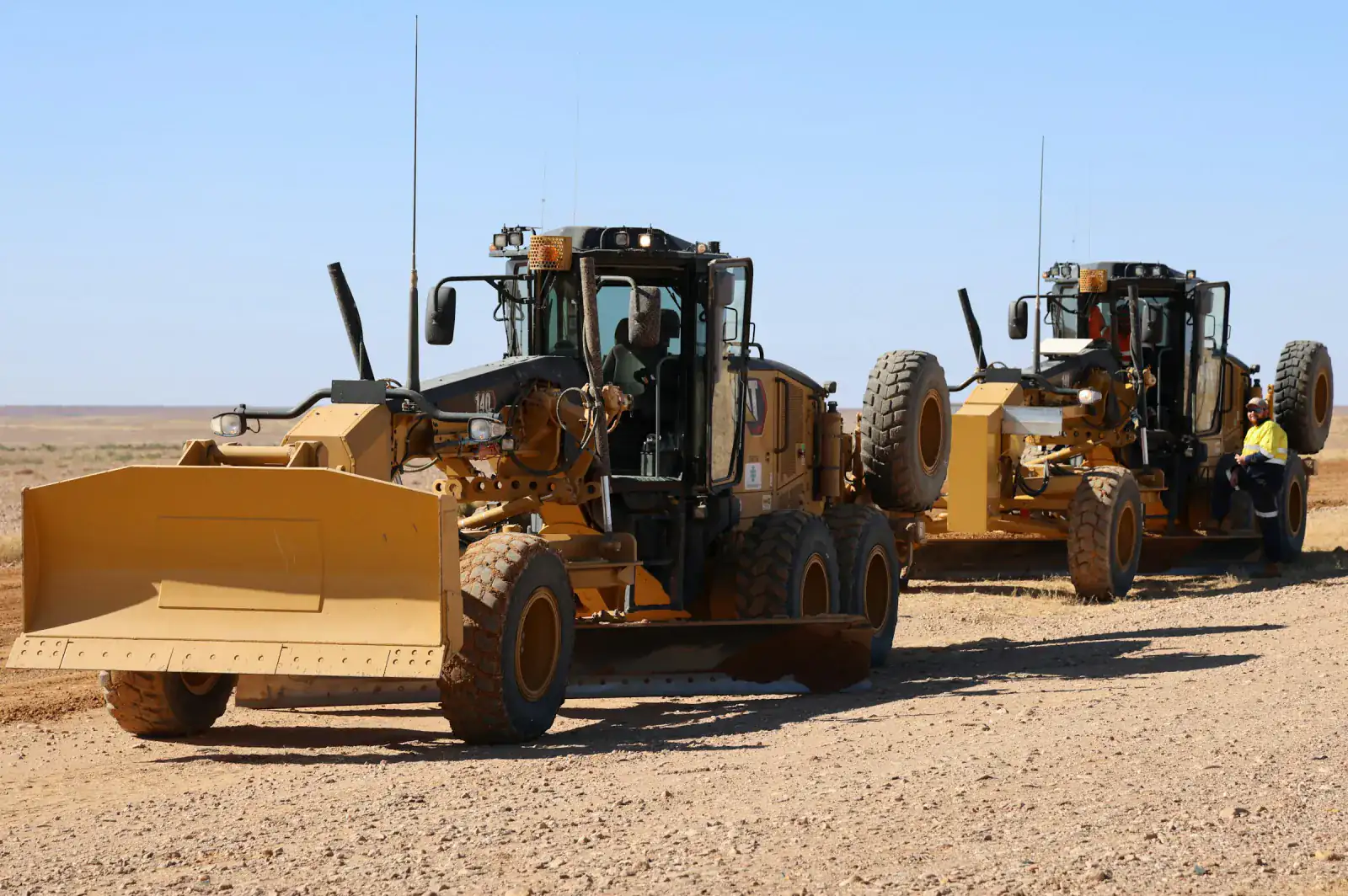
Utilisation matters as much as condition. Machines on long-term hire earn their keep. Machines parked in the yard between contracts are either spare capacity the business genuinely needs or surplus assets that sit outside the earnings. Finance owing on the fleet is deducted from enterprise value to reach the value of the shares.
We value the business, not the machines. A plant and machinery valuer's report on the fleet is a useful input, particularly where earnings are thin and the realisable value of the equipment sets a floor. In a downturn, though, many contractors try to sell the same kind of equipment at once, so that floor can sit well below a good-year auction result. More on this in how plant and equipment affects business value.
Fuel is a further check. Fuel tax credits can be claimed for eligible fuel used in business activities off public roads, which includes plant working on mine sites. Whether the contractor or the client buys the diesel changes revenue, costs and who claims the credit, so the contracts and the claims need to line up.
Why does a safety record carry value?
Because site access depends on it. Mining clients prequalify contractors on their safety systems and record, and a serious incident can end a contractor's time on a site, which for a concentrated business can mean losing most of its revenue at once. Mine safety is governed by specific laws, such as Western Australia's Work Health and Safety (Mines) Regulations 2022 and Queensland's Coal Mining Safety and Health Act 1999 and Mining and Quarrying Safety and Health Act 1999, on top of general work health and safety duties.
A buyer looks at incident history, regulator notices, the safety management system and who runs it. A system that depends on the owner personally signing off every risk assessment is a key-person risk as much as a safety one.
How much of the business depends on a few people?
Mining services businesses are often built on a founder's relationships with site superintendents and maintenance managers. Supervisors with site-specific authorisations, experienced planners and tradespeople willing to work a fly-in fly-out roster are hard to replace quickly. We look at the depth of the management team, whether client relationships sit with more than one person, staff turnover, and how roster, travel and accommodation costs are recovered under the contracts.
Where the founder is the main point of contact with every client, a buyer will expect a handover period and may tie part of the price to keeping the contracts. That shapes how a deal is structured and, for a business sale or a shareholder exit, what the shares are worth today.
Which valuation methods fit?
For an established contractor with several years of history across more than one client, capitalising cycle-normalised maintainable earnings, after a fleet and component allowance, is usually the main method. Where the business depends on a few contracts with known end dates, or is moving into a new commodity or region, a discounted cash flow that follows each contract is often more informative. An asset-based check uses the realisable value of the fleet less the finance owing. Each method is explained in how we value industrial businesses, and our engineering business valuation guide covers firms whose work spans mine sites and other industries.
What information do we need?
- Three years of financial statements and current year management accounts, with revenue split by client, site and service line
- Master services agreements, current work orders and rate schedules
- A record of contract tenure, renewals, and tenders won and lost
- A fleet register with hours, component history, ownership and finance
- Maintenance plans and recent component rebuild costs
- Workforce numbers by role and roster, enterprise agreements and any labour hire arrangements
- Safety statistics, incident reports and regulator correspondence
- Fuel purchases and fuel tax credit claims
Documents come through the private upload link on your matter once we are engaged. When you are ready, request a fixed-fee quote.
Questions
Does a long-term contract with a major miner increase the value?
Only as far as its terms do. A long agreement with no committed volume and a termination for convenience clause gives limited certainty. A record of renewals, a committed scope and cost pass-through clauses support value far more than the headline term.
How do commodity prices affect the value of a mining services business?
Through the earnings a buyer believes can be maintained. We look at which commodities and mines the revenue depends on, where each mine is in its life and how the business performed in earlier downturns, then set earnings that hold up across the cycle rather than at its peak.
Is our equipment fleet valued separately?
No. Where the business is valued on its earnings, the fleet is inside that value and the finance owing on it is deducted. A plant and machinery valuation can be an input, and it matters most when earnings are thin, because then what the fleet would realise can set a floor under the value. The service trucks and hire equipment a crew needs on site are part of what earns the profit, not an extra on top of it.
Can you value a mining services business in Western Australia or Queensland?
Yes. We value businesses Australia-wide, in most cases from documents and conversations. If the operation or equipment needs to be seen, we say so when scoping and agree any visit and its cost before we start.
Short answers on this topic
- How is a CNC machining or precision engineering business valued?A CNC machining or precision engineering business is valued on the earnings it can sustain after the cost of keeping its machines current. The main...
- Does machinery add to the value of my business?No, not on top of the earnings it helps produce. Machinery the business needs is already inside an earnings-based value, so owning plant worth $3...
- How does relying on one major customer affect my business value?Relying on one major customer usually lowers value, because a single decision by that customer could remove a large share of profit while overheads...
Sources
- Fair Work Act 2009 (Cth), Part 2-7A, ss 306E and 306F (Federal Register of Legislation)
- Regulated labour hire arrangement order PR791039, 26 August 2025 (Fair Work Commission)
- Regulated labour hire arrangement order PR791043 (Fair Work Commission)
- AASB 116 Property, Plant and Equipment: measurement after recognition (AASB)
- Fuel tax credits: all other business uses (ATO)
- Work Health and Safety (Mines) Regulations 2022 (WA) (Western Australian Legislation)
- Coal Mining Safety and Health Act 1999 (Qld) (Queensland Legislation)
General information only, not advice about your circumstances. A valuation depends on the facts of the business and the purpose it is for.